
How Can Commercial Carports Improve Storage and Organization for Businesses?
Commercial carports improve storage and organization by giving businesses a dedicated, covered space for vehicles, equipment, materials, and other valuable assets. Metal carports can reduce exposure to sun, rain, hail, and debris while keeping frequently used items accessible and organized. For many commercial and industrial properties, they offer a practical alternative to leaving assets outdoors or constructing a fully enclosed building.
Infinity Carports helps businesses and organizations create durable metal structures designed around real operational needs. Whether a company needs covered fleet parking, equipment storage, material staging, or additional workspace, the right carport can make better use of available property without unnecessarily complicating daily operations. With customizable dimensions and configurations, commercial carports can accommodate everything from passenger vehicles to trucks, trailers, machinery, and supplies. Infinity Carports focuses on helping customers find a solution that fits how their property actually works, combining dependable steel construction with attentive customer care from planning through installation.
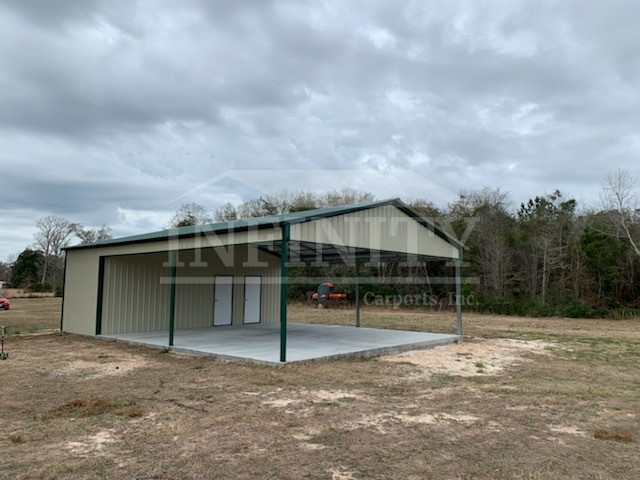
Why Metal Carports Are a Smart Commercial Storage Solution
For businesses that need more usable storage without necessarily adding a fully enclosed structure, metal carports provide a flexible way to create protected, organized space. They can be positioned near offices, warehouses, shops, loading areas, or equipment yards so employees can quickly access the assets they use most.
Commercial carports can serve many purposes, including:
- Fleet vehicle parking
- Heavy equipment storage
- Trailer and utility vehicle protection
- Construction material storage
- Covered loading and staging areas
- Agricultural equipment storage
- Employee or customer parking
- Maintenance and service areas
Because the structure can be customized to its intended use, businesses can create a storage system that supports their workflow instead of simply finding another place to put equipment.
How Do Carports Help Businesses Organize Vehicles and Equipment?
Carports create clearly defined storage zones, making it easier for employees to know where vehicles, equipment, and supplies belong. This can reduce clutter around a commercial property and help keep frequently used assets accessible.
A contractor, for example, might use a steel carport to keep trailers and machinery together rather than parking them throughout the property. A landscaping company could establish separate covered areas for trucks, mowers, and other equipment. Industrial facilities might use a larger structure for machinery, materials, or items waiting to enter the next stage of production.
Organization can also improve efficiency. Employees spend less time locating equipment when assets have designated storage locations. Covered areas can provide predictable places for inspections, loading, unloading, and routine maintenance.
Practical tip: Before choosing a carport size, consider not only what you need to store today but also the vehicles or equipment your organization may add later. Planning for growth can prevent a storage solution from becoming undersized too quickly.
What Business Assets Can Metal Carports Protect?
Commercial metal carports can protect vehicles, machinery, trailers, supplies, and other outdoor assets from direct exposure to everyday weather conditions. A roofed structure creates an important barrier between valuable equipment and sun, rain, hail, falling debris, and other environmental exposure.
Potential applications include protecting:
- Company cars, vans, and pickup trucks
- Work trucks and service vehicles
- RVs, buses, and oversized vehicles
- Tractors and agricultural equipment
- Construction machinery
- Utility and cargo trailers
- Landscaping equipment
- Building materials and supplies
Weather protection can be especially important for organizations with sizable vehicle fleets. Hail, for example, can dent vehicle panels and damage windshields. In 2025, the United States recorded 5,430 severe hail events, according to the National Weather Service Storm Prediction Center data cited by Kiplinger.
A carport cannot eliminate every weather-related risk, but covered storage provides another layer of protection for assets that would otherwise remain completely exposed.
Can Commercial Carports Make Daily Operations More Efficient?
Yes. A well-planned commercial carport can improve efficiency by placing protected storage closer to where employees actually need vehicles, equipment, and materials.
Think of a carport as more than covered parking. Depending on its design and placement, it can become part of a company’s workflow.
For example, a business might use one section for fleet parking and another for equipment awaiting service. A warehouse could establish a covered staging area where weather-sensitive materials wait before being moved indoors. Contractors could load vehicles under cover instead of working in direct sun or rain.
Businesses should consider three questions when planning placement:
- What needs the fastest access? Frequently used vehicles and equipment should be positioned accordingly.
- How will traffic move around the structure? Allow sufficient clearance for vehicles, trailers, forklifts, or other machinery.
- Could storage needs change? Consider future fleet growth and equipment purchases before finalizing dimensions.
Thoughtful planning turns a carport from simple shelter into useful operational infrastructure.
Why Choose Steel Carports for Commercial Applications?
Steel offers businesses a combination of durability, design flexibility, and long-term usefulness that makes it well suited to commercial structures.
One advantage is the ability to create substantial covered areas while maintaining practical access. Steel construction can be configured for different widths, lengths, heights, and roof styles depending on the project and site requirements.
Steel also has sustainability advantages. According to the American Institute of Steel Construction (AISC), structural steel produced in the United States contains an average of approximately 92% recycled content. AISC also reports that 98% of structural steel is recovered for recycling at the end of its useful life.
Steel fabrication can provide construction efficiencies as well. AISC notes that steel components can be fabricated offsite to precise tolerances and then erected relatively quickly in the field. For businesses planning new storage or covered work areas, efficient construction can help limit disruption to normal operations.
How Should a Business Choose the Right Commercial Carport?
The right commercial carport should be sized and configured around the assets being protected, traffic flow, property layout, and expected future needs.
Start by creating an inventory of everything that will regularly use the structure. Record vehicle dimensions, equipment heights, trailer lengths, and the clearance required for loading or maneuvering.
Then consider:
- Total required width and length
- Vehicle and equipment height
- Entry and exit clearance
- Number of parking or storage spaces
- Site access and traffic patterns
- Roof and side coverage
- Local permitting and building requirements
- Potential expansion needs
Businesses should also consider whether open-sided coverage is sufficient or whether additional side protection would better suit the assets being stored.
Choosing a structure based only on today’s minimum requirements can create problems later. A slightly larger or more versatile configuration may offer considerably more value as the business grows.
Frequently Asked Questions About Commercial Carports
Are metal carports only for vehicle storage?
No. Businesses can use metal carports for machinery, trailers, supplies, construction materials, equipment staging, covered work areas, and many other commercial or industrial applications.
Are commercial carports customizable?
Yes. Metal carports can be configured in different dimensions and layouts to accommodate specific vehicles, equipment, property constraints, and operational requirements.
Is a carport better than a fully enclosed storage building?
It depends on the application. A carport is useful when a business needs convenient covered storage and open access, while a fully enclosed metal storage building may be better when security, climate control, or complete weather enclosure is required.
Can a commercial carport accommodate large trucks or equipment?
Yes, when appropriately designed. Commercial carports can be sized with additional height, width, and clearance for trucks, trailers, RVs, machinery, and other oversized assets.
Create More Useful Space With Infinity Carports
A commercial carport can do more than provide shade. The right structure can help organize vehicles and equipment, protect valuable business assets, improve workflow, and turn underused property into functional covered space.
Infinity Carports provides metal carport and steel building solutions designed around the practical needs of businesses and organizations. Whether you need fleet parking, equipment storage, material coverage, or room for future growth, a customized structure can help you make better use of your property.
Ready to improve your commercial storage and organization? Contact Infinity Carports to start planning your metal carport today.