
What Size Carport Do I Need for My Vehicle?
The right carport size depends on your vehicle’s width, length, and height, plus enough clearance to comfortably park, open doors, and move around it. A 12-foot-wide carport is a common starting point for one vehicle, while two-car carports are often 20 to 24 feet wide. RVs, trucks, boats, and storage needs typically require additional width, length, or height.
Choosing the right size is one of the most important decisions when buying a metal carport. A structure that is too small can make parking difficult, while an oversized structure may use more property than necessary. Infinity Carports helps customers find metal carports and steel structures that match their vehicles, property, storage needs, and plans for the future. Whether you need coverage for a daily driver, multiple vehicles, a truck, an RV, or additional equipment, careful measurements can help you get more value from your investment. The goal is not simply to fit your vehicle underneath the roof. It is to create a covered space that is comfortable and practical to use every day.
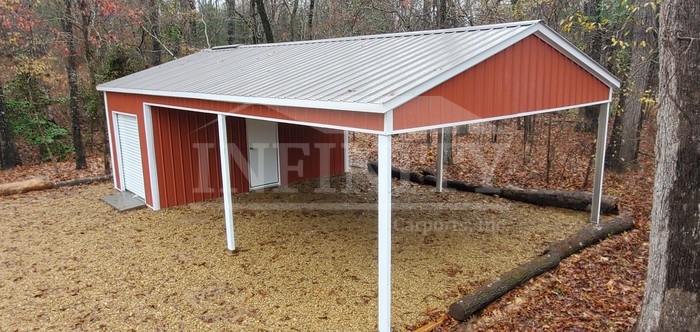
How to Choose the Best Metal Carport Dimensions
Choosing carport dimensions starts with measuring what you plan to protect, then adding practical clearance around it. According to a 2026 Angi carport sizing guide, a minimum single-car carport can be approximately 10 feet wide by 18 feet deep, while a standard two-car carport is commonly around 24 feet wide by 20 feet deep.
Those measurements are useful starting points, not universal rules. Your vehicles, available property, local requirements, storage plans, and desired maneuvering space should determine the final dimensions.
How Much Bigger Should a Carport Be Than Your Vehicle?
A carport should be wider and longer than the vehicle itself so you have room to park, open doors, walk around the vehicle, and keep the vehicle under the roof coverage.
Start by measuring your vehicle’s actual width and length instead of relying solely on manufacturer classifications such as “midsize SUV” or “full-size truck.” Mirrors, bumpers, hitches, accessories, and other equipment can change the amount of space required.
A metal carport buyer’s guide from MetalCarports.com recommends measuring the vehicle and adding at least two feet of additional space on all sides when estimating carport dimensions.
Before ordering, measure:
- Vehicle width: Include mirrors if they will remain extended while parking.
- Vehicle length: Include bumpers, hitches, spare tires, racks, or other permanent accessories.
- Vehicle height: Measure to the highest point, including roof racks and accessories.
- Door clearance: Make sure passengers can comfortably enter and exit.
- Walking space: Consider how much room you want around the parked vehicle.
If you frequently unload groceries, tools, sports equipment, or other items from the vehicle, extra space can make the carport significantly more useful.
What Size Carport Do I Need for One, Two, or Three Cars?
A single-car metal carport commonly starts around 10 to 12 feet wide, while two-car structures generally require approximately 20 to 24 feet or more, depending on vehicle sizes and desired clearance.
Angi’s 2026 sizing guide identifies these approximate minimum dimensions:
- One car: 10 feet wide by 18 feet deep
- Two cars side by side: 20 feet wide by 18 feet deep
- Three cars side by side: 30 feet wide by 18 feet deep
Minimum dimensions, however, are not necessarily the most comfortable dimensions. Angi notes that a standard two-car carport is commonly 24 feet wide by 20 feet deep, providing more room between vehicles.
A wider structure can be particularly valuable if you own pickups or SUVs rather than compact cars.
When deciding between sizes, ask yourself:
- Can every vehicle park without feeling crowded?
- Can all doors open comfortably?
- Is there enough room to walk between vehicles?
- Will you need space for tools, lawn equipment, bicycles, or storage?
- Are you likely to purchase a larger vehicle in the future?
If the answer to the last two questions is yes, choosing additional space now may prevent you from outgrowing your carport later.
How Tall and Wide Should an RV Carport Be?
An RV carport should be based on the RV’s actual height, width, and length, including rooftop air conditioners, vents, antennas, solar panels, slide-outs, and other accessories.
RV sizing deserves extra attention because recreational vehicles can vary dramatically. A Class B camper van has very different clearance requirements from a large Class A motorhome or fifth wheel.
Measure the RV from the ground to its highest permanent point. Pro Metal Buildings recommends allowing approximately one to two feet of clearance above an RV roof, and its sizing guidance suggests widths of roughly 12 to 18 feet and lengths of 30 to 50 feet depending on RV type.
For a large RV, consider:
- Rooftop air-conditioning units
- Satellite equipment
- Solar panels
- Roof vents
- Awning clearance
- Slide-outs
- Side mirrors
- Ladders
- Tow hitches
- Space needed for maintenance
Width is especially important if you want to extend slide-outs while the RV is parked. An RV that fits beneath the roof when closed may require considerably more space when its slides are extended.
Practical tip: Measure your current RV, but think about your next RV too. If you expect to upgrade to a larger motorhome or fifth wheel, planning additional clearance now could save you from needing another structure later.
Should You Add Extra Space for Storage?
Yes. If you expect to store tools, lawn equipment, trailers, bicycles, recreational gear, or other items under your carport, include that space in your dimensions before ordering.
Metal carports can provide much more than vehicle protection. Additional covered space can become useful for equipment storage, projects, maintenance, loading and unloading, or recreational activities.
Consider adding room for:
- Lawn mowers and landscaping equipment
- ATVs and utility vehicles
- Bicycles
- Motorcycles
- Toolboxes and workbenches
- Trailers
- Boats and watercraft
- Outdoor equipment
Think about how people and vehicles will move through the structure. Filling every available foot with storage can make a technically large carport feel cramped.
A longer or wider custom metal carport can provide flexibility without requiring a completely separate storage structure.
What Else Should You Consider Before Choosing a Carport Size?
Property dimensions, local regulations, site access, future vehicle purchases, and the carport’s intended use should all be considered before finalizing the size.
First, measure the installation area itself. Confirm that the proposed carport will fit while maintaining appropriate access around the structure.
Local rules are another important consideration. Permit requirements, property setbacks, anchoring requirements, and other building regulations vary by jurisdiction. The Spruce notes that both custom and prebuilt carports can be subject to permitting, inspections, setbacks, and plan reviews depending on local requirements.
Finally, think beyond today’s needs. A carport may remain on your property much longer than your current vehicle. Leaving additional capacity can give you more flexibility if you purchase a larger truck, add another vehicle, buy an RV, or simply need more covered storage later.
Frequently Asked Questions About Carport Sizes
Is a 12-foot-wide carport big enough for one car?
A 12-foot-wide metal carport is a common size for a single vehicle and can work well for many cars and trucks. Always compare the structure’s usable dimensions with your vehicle’s actual measurements and desired door clearance.
What is a good size for a two-car carport?
A 20-foot-wide structure may accommodate two vehicles, but approximately 24 feet of width can provide more comfortable spacing. Angi lists 24 by 20 feet as a standard two-car carport size.
What size carport do I need for an RV?
The correct RV carport size depends on the RV’s exact width, length, and maximum height. Measure rooftop accessories and consider slide-outs, mirrors, maintenance access, and additional clearance before selecting the structure.
Is it better to buy a bigger carport?
A slightly larger carport can be worthwhile when you expect to add vehicles, upgrade to a larger RV, or need extra storage. The goal is to provide useful additional space without unnecessarily exceeding your available property or budget.
Find the Right Metal Carport Size With Infinity Carports
Choosing the right carport size comes down to more than counting vehicles. Measure the width, length, and height of everything you want to protect, then account for doors, walking room, storage, accessories, and future needs.
Infinity Carports offers metal carports, steel carports, RV carports, and other metal building solutions for a wide range of storage and vehicle protection needs. Instead of settling for a structure that barely fits, plan for a carport that will remain practical as your needs change.
Ready to find the right carport for your vehicles and property? Contact Infinity Carports to start planning your structure today.